
How to Relax After Work: The Ultimate Recharge Guide for Educators & Students
Introduction
Whether you are managing a busy school, checking papers, designing educational content, or studying for competitive exams, a full day of mental labor takes a heavy toll. By the time the evening rolls around, your brain can feel completely drained.
Many professionals and students make the mistake of leaving work only to bring their stress straight home. Learning how to properly relax after work isn’t just a luxury—it is a physiological necessity to maintain long-term productivity, focus, and mental well-being. This guide explores highly effective, practical strategies to help you switch off your work brain, decompress your body, and reclaim your evenings.
Why “Switching Off” is Essential for Your Brain
When you spend hours solving problems, looking at digital screens, or managing classrooms, your brain remains in a constant state of high alertness (the sympathetic nervous system). If you do not consciously transition into a state of rest, your body continues to secrete stress hormones like cortisol.
Over time, failing to decompress leads to digital fatigue, chronic exhaustion, and a severe drop in your creative problem-solving abilities. Creating a hard boundary between your working hours and your personal life is the secret to waking up energized the next morning.
5 Effective Ways to Relax and Recharge After Work
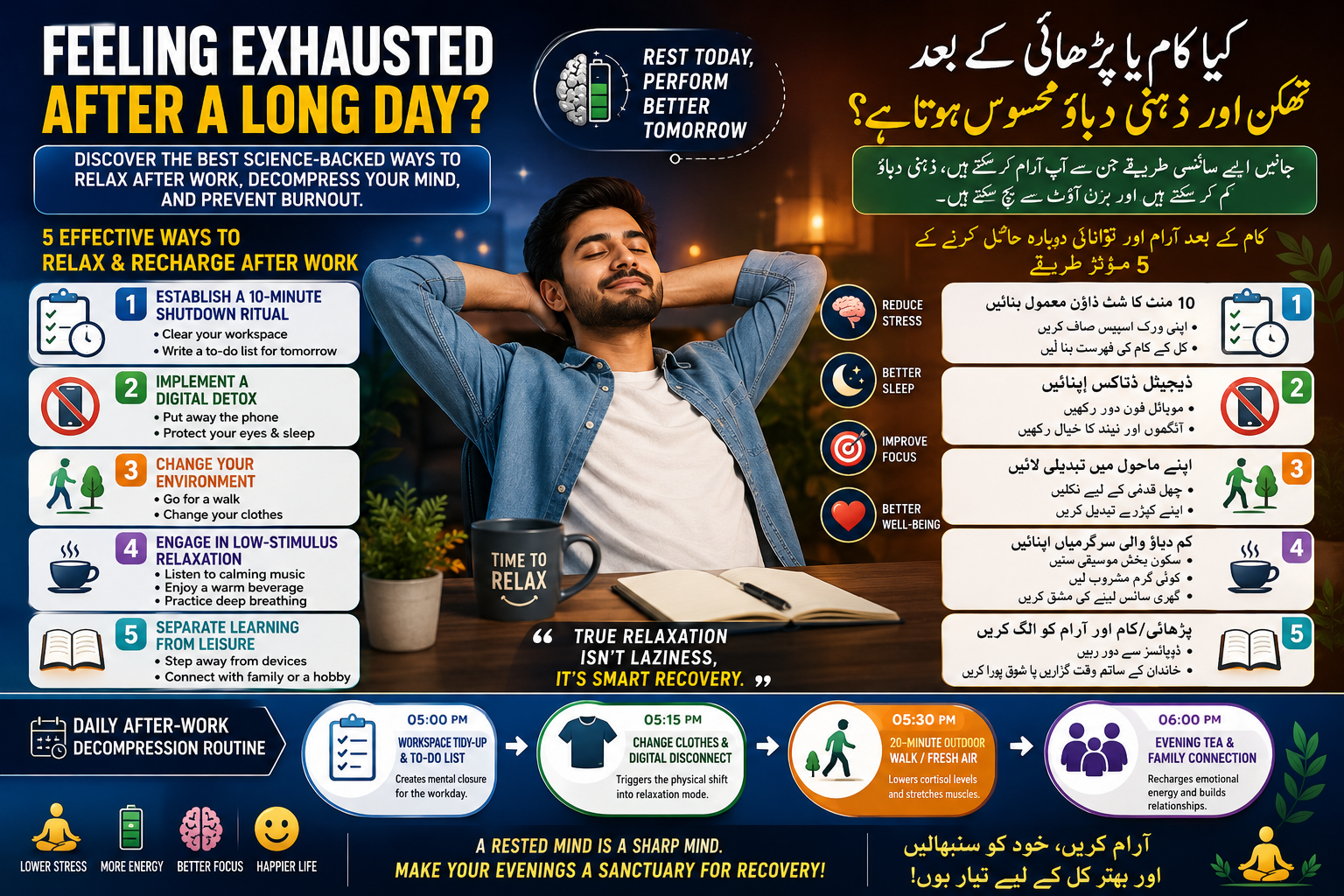
1. Establish a 10-Minute “Shutdown Ritual”
The transition from worker to individual doesn’t happen automatically. You need a mental bridge.
- Clear your workspace: Before you leave your desk, close your open browser tabs, tidy up your physical desk, and write down a quick to-do list for tomorrow.
- Close the loop: Putting your remaining tasks on paper signals to your brain that work is officially over for the day, allowing you to stop worrying about uncompleted tasks.
2. Implement a Digital Detox (Screen Sabbatical)
Most of our work today involves staring at screens—whether configuring software themes, managing online portals, or replying to messages.
- Put away the phone: For at least the first hour after work, place your smartphone in another room or turn off all work-related notifications.
- Protect your eyes: Continuous exposure to blue light strains your eyes and tricks your brain into staying awake, disrupting your natural sleep cycle. Give your mind a break from the digital noise.
3. Change Your Environment Immediately
Your physical surroundings deeply influence your mental state. Staying in the exact same spot where you worked makes it impossible to unwind.
- Go for a walk: A simple 15-to-20-minute walk in a park or around your neighborhood introduces fresh oxygen into your system and lowers your heart rate.
- Change your clothes: As soon as you get home, change out of your formal work attire or school uniform into comfortable loungewear. This physical act acts as a powerful psychological trigger that tells your mind it is safe to relax.
4. Engage in Low-Stimulus Relaxation
To truly decompress, stay away from high-dopamine activities like scrolling through short-form social media videos, which actually tire your brain out even more. Instead, opt for:
- Listening to calming music: Instrumental tunes, acoustic tracks, or nature sounds help slow down racing thoughts.
- Enjoying a warm beverage: Sitting down quietly with a cup of herbal tea or a warm drink without looking at a screen can be incredibly grounding.
- Mindful breathing: Spend 5 minutes practicing deep belly breathing to actively switch your body into its relaxation mode (parasympathetic nervous system).
5. Separate Learning from Leisure
For students and educators who utilize online portals for continuous evaluation or lesson planning, it is crucial to separate screen time used for productivity from your rest period. Once your automated certificates are generated and your text answers are submitted, step away from the device completely. Use your evenings to connect face-to-face with family, enjoy a hobby, or read a physical book.
Daily After-Work Decompression Routine
| Time Frame | Activity | Purpose |
| 05:00 PM | Workspace Tidy-Up & To-Do List | Creates mental closure for the workday. |
| 05:15 PM | Change Clothes & Digital Disconnect | Triggers the physical shift into relaxation mode. |
| 05:30 PM | 20-Minute Outdoor Walk / Fresh Air | Lowers cortisol levels and stretches muscles. |
| 06:00 PM | Evening Tea & Family Connection | Recharges emotional energy and builds relationships. |
Conclusion
True relaxation after a demanding day isn’t about being lazy; it is about smart recovery. By setting clear boundaries, stepping away from your screens, and allowing your mind to rest, you protect your health and improve your performance for the days to come. Remember, a rested mind is a sharp mind. Make your evenings a sanctuary for recovery, and watch your daily productivity soar!
Focus Tags for this Post (Single Paragraph)
how to relax after work, stress relief for teachers, decompress after studying, mental health for educators, digital detox tips, work life balance, evening relaxation routine, preventing burnout, screen fatigue recovery, mindfulness for students, stress management techniques, how to unwind, healthy evening habits, mental recharge guide, productivity rest cycle
Tag:decompress after studying, digital detox tips, evening relaxation routine, healthy evening habits, how to relax after work, how to unwind, mental health for educators, mental recharge guide, mindfulness for students, preventing burnout, productivity rest cycle, screen fatigue recovery, stress management techniques, stress relief for teachers, work life balance



1 Comment